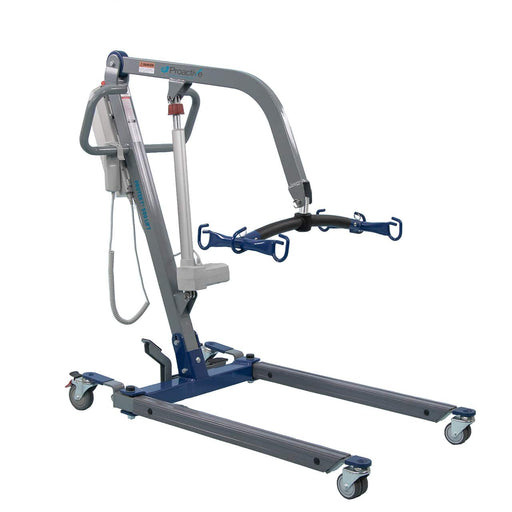
Types of Mobility Lifts
Understanding the different categories of mobility lifts for sale is the first step toward finding the right fit. Each type is designed for a specific environment and user need, so the details below will help you narrow your options quickly.
Platform Lifts
Vertical Platform Lifts (VPLs) accommodate up to 750 lbs and travel heights of 52 to 144 inches, making them the most common ADA-compliant solution for commercial ramps and residential decks. They move straight up and down and work well both indoors and outdoors.
Inclined Platform Lifts (IPLs), on the other hand, follow the angle of the staircase and offer a practical alternative when space constraints prevent installing a full VPL. Most IPLs require a minimum stairway width of approximately 28 inches.
-
Vertical Platform Lifts (VPLs): Move straight up and down; suitable for indoor and outdoor use with weight capacities up to 750 lbs.
-
Inclined Platform Lifts (IPLs): Follow the angle of the stairs; designed for straight and curved staircases where a VPL footprint isn’t feasible.
Stair Lifts
Straight stairlift rails can typically be installed in 2 to 4 hours. Curved stairlift rails are custom-manufactured to the exact geometry of your staircase and may take 2 to 4 weeks to fabricate before installation begins. Weight capacities generally range from 250 lbs on standard models to 400 lbs on heavy-duty models. Key brands in this category include Bruno, Acorn, and Harmar.
-
Straight Stair Lifts: For stairs without curves or landings; faster to install and generally lower in cost.
-
Curved Stair Lifts: Custom-built to fit staircases with bends or multiple landings; longer lead time and higher price point.
Vehicle Lifts
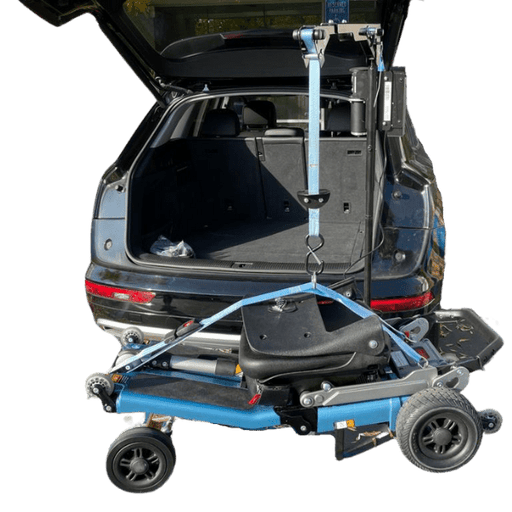
Outside lifts, also called platform or fold-out lifts, are the most affordable vehicle lift option and are typically priced between $800 and $2,500. Inside lifts require more cargo space but keep the mobility device protected from weather. Harmar and Bruno dominate this category. Before purchasing, confirm your vehicle’s hitch receiver class (Class III or Class IV) to ensure compatibility.
-
Outside Lifts: Attach externally and lift the mobility device off the ground; most budget-friendly option.
-
Inside Lifts: Installed inside the vehicle to hoist and store the mobility device; better weather protection.
Portable Lifts
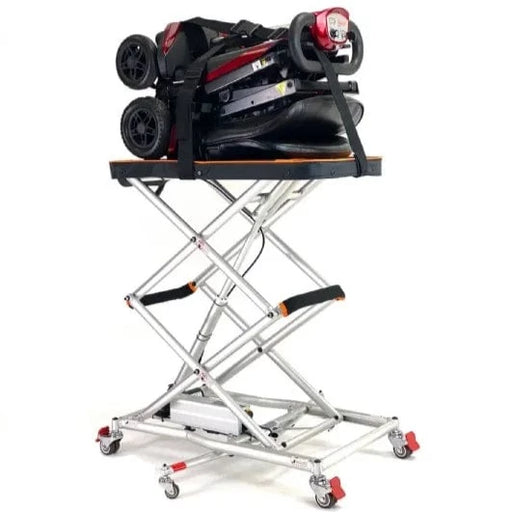
Portable motorized lifts such as the Hoyer Journey are battery-powered and weigh as little as 35 lbs when disassembled, making them well-suited for hotel rooms, vacation rentals, and temporary home use. Manual foldable lifts are the lowest-cost entry point and are often available for under $500.
-
Foldable Manual Lifts: Operate by hand and fold for storage; lowest-cost option, typically under $500.
-
Portable Motorized Lifts: Battery-operated and designed to dismantle easily for travel; models like the Hoyer Journey offer a practical solution for users on the move.
Benefits of Mobility Lifts
Mobility lifts give people with limited mobility a genuine path back to independence within their homes, vehicles, and communities. Beyond convenience, they address real safety concerns and can extend how long a person can remain in their own home.
Increased Independence
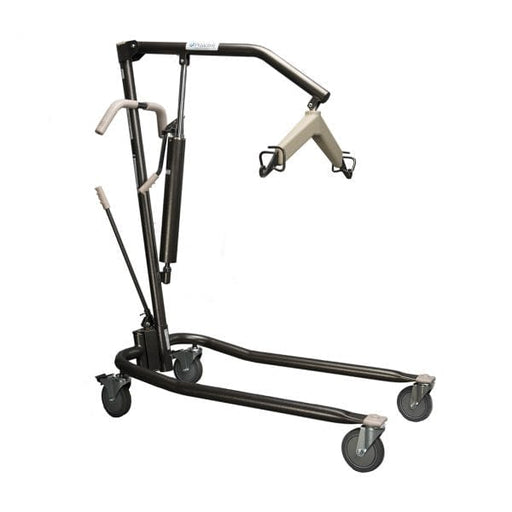
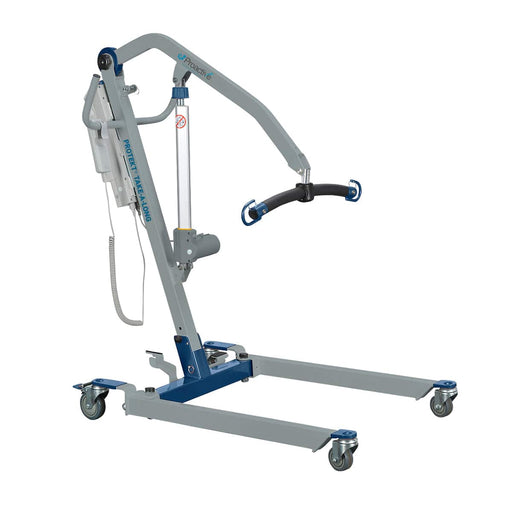
According to the CDC, falls are the leading cause of injury-related death among adults 65 and older, and mobility lifts directly reduce fall risk on stairs and during vehicle transfers. Users report that stairlifts and platform lifts allow them to remain in their homes an average of 5 to 7 years longer than they otherwise would. The most common brand for patient lifts is an electric lift, which is widely prescribed for in-home transfers.
-
Stairlifts: Allow users to ascend and descend stairs while seated.
-
Vertical platform lifts transport a person directly from one level to another, inside or outside the home.
-
Vehicle lifts: Enable easy transfer of wheelchairs or mobility devices into cars or vans.
-
Insurance and Funding: Some mobility lifts, particularly patient and Hoyer lifts, may be covered by Medicare Part B as Durable Medical Equipment (DME) when a physician prescribes them. Stairlifts and VPLs are generally not Medicare-covered but may qualify for state Medicaid waiver programs or VA benefits for eligible veterans.
Safety and Accessibility
Most residential stairlifts and VPLs meet or exceed ASME A18.1 safety standards for platform lifts and stairway chairlifts. When evaluating models, look for units with obstruction sensors, seatbelts on stairlifts, and battery backup so the lift keeps operating during a power outage. These features are not optional extras on a quality unit; they are the baseline for safe daily use.
Features enhancing safety:
- Anti-slip flooring
- Barrier arms for security
- Emergency stop buttons
- Obstruction sensors and battery backup
Space Efficiency
Folding rail stairlifts retract the footrest and seat to within 11 to 12 inches of the wall, leaving the staircase fully usable by other household members. Some VPL models include a fold-down platform that reduces the footprint to under 12 square feet when not in use. Some lifts are specifically designed to fold away completely, preserving the living space for other activities.
Examples of space-saving lifts:
-
Foldable stairlifts: Chairs that fold up against the wall to within 11 to 12 inches.
-
Compact VPLs: Fold-down platforms that minimize footprint when the lift is not in use.
Considerations When Choosing a Mobility Lift
Selecting the right mobility lift involves assessing several factors specific to the user and the environment. The considerations below are the ones buyers most commonly overlook, and getting them right upfront saves significant time and expense.
Weight Capacity
Standard stairlifts support 250 to 300 lbs; heavy-duty or bariatric models support 400 to 600 lbs. For patient and Hoyer lifts, check the sling weight rating separately from the lift’s rated capacity, as the two figures are not always identical. A practical rule of thumb is to select a lift rated at least 20% above the user’s actual weight to ensure a safe operating margin.
-
Maximum Lift Capacity: Ensure the lift can handle at least the user’s weight plus the weight of any mobility device.
-
Safety Margin: Select a lift rated at least 20% above actual weight needs; bariatric models are available up to 600 lbs.
Space Constraints
For stairlifts, measure the narrowest point of the staircase. Most models require a minimum clear width of 28 to 30 inches. For VPLs, the platform size (typically 36 inches by 54 inches for a standard wheelchair) determines the minimum shaft or enclosure footprint. Outdoor VPLs require weatherproof enclosures or corrosion-resistant aluminum construction to hold up over time.
-
Vehicle Lifts: Measure the available space in your vehicle and confirm hitch receiver class before purchasing.
-
Home Lifts: Assess the narrowest staircase width and available floor area; some VPLs can be installed without a pit, which significantly reduces installation cost and disruption.
Ease of Use
Look for remote controls or call-and-send stations at both the top and bottom of the staircase. Joystick controls are preferred for users with limited hand dexterity. Also ask whether the manufacturer offers a local service network, because response time matters when the lift is a daily necessity.
-
Controls: Look for lifts with simple, intuitive controls; joystick operation is ideal for users with limited hand strength.
-
Maintenance: Choose a lift supported by a local service network so repairs are handled promptly.
Compatibility with Vehicle or Home
For vehicle lifts, verify the hitch receiver class, vehicle floor height, and door opening dimensions before ordering. For home lifts, check whether installation requires a dedicated 110V or 220V electrical circuit. This is especially relevant for mobility lifts, where the installation environment directly affects which models are appropriate.
-
Vehicle Compatibility: Confirm hitch receiver class (Class III or IV), vehicle floor height, and door clearance.
-
Home Compatibility: Verify electrical requirements (110V or 220V) and whether a pit-free VPL installation is possible to reduce renovation scope.
Warranty and Service
Look for at least a one-year parts warranty. Leading brands like Bruno and Harmar offer two- to five-year warranties on major components. Confirm whether in-home service is available in your area, as shipping a lift for repair is rarely practical when it is part of your daily routine.
-
Warranty Coverage: Bruno and Harmar offer two- to five-year warranties on major components; confirm coverage terms before purchasing.
-
Service Network: In-home service availability is a key factor, particularly for stairlifts and VPLs that cannot easily be shipped for repair.
Selecting a mobility lift that addresses these considerations will give you confidence the unit will perform reliably for years to come.